How to Prepare and Stage a Luxury Home to Sell
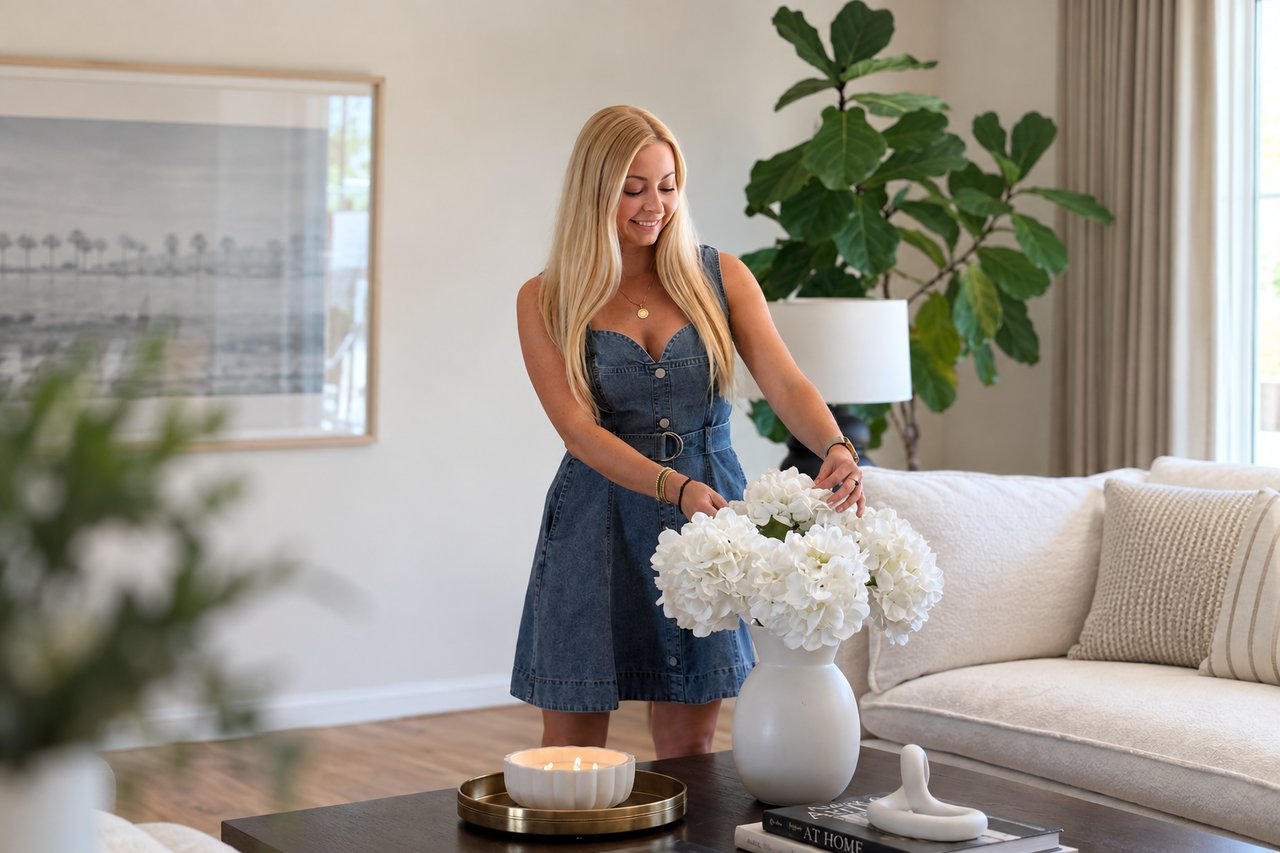
Final touches are my favorite part of listing prep day. By the time I'm fluffing hydrangeas and lighting a candle, the heavy lifting is done — the repairs, the decluttering, the hard conversations about what goes and what stays. That last layer takes twenty minutes and looks like the least consequential thing I do all week. It isn't. It's the part buyers actually feel when they walk through the door, and after more than $200M in closed sales I've come to treat it as the most important hour of the entire launch.
— Nikol Klein, Compass Luxury | Top 1% Luxury Agent | Voted Best Real Estate Agent in Encinitas, La Costa, and Olivenhain
Preparing a luxury home for market is not one task. It's a sequence, and the order matters more than the budget.
Here's what most sellers get wrong at the end of that sequence: they think presentation is decoration. It isn't. It's evidence — and understanding that distinction is worth real money.
Start With the Order of Operations
Sellers routinely work this list out of order, and it costs them.
First, resolve anything an inspector will find. Deferred maintenance, the cabinet that won't close, the slow drain, the exterior wear that coastal air produces faster here than almost anywhere. These are not cosmetic items and they cannot be styled around.
Second, declutter and depersonalize. Not minimalism — editing. Buyers need room to imagine their own life in the space, and they cannot do that while navigating someone else's.
Third, deep clean. Including the things nobody deep cleans: window glass, light fixtures, baseboards, grout, the inside of the refrigerator a buyer will absolutely open.
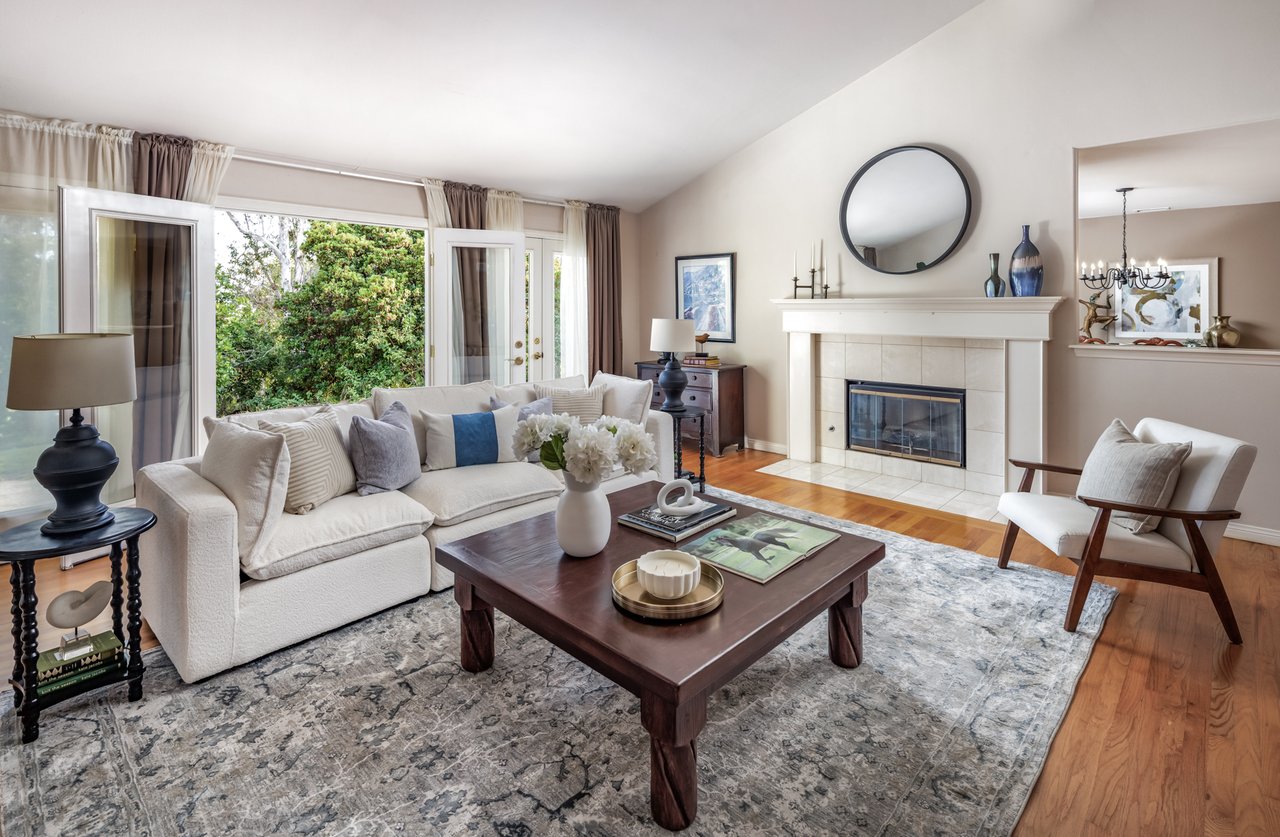
Fourth, staging and the presentation layer. Flowers, light, sight-lines, the final styling pass.
Fifth — and only fifth — photograph it, scheduled for the light to set the mood.
The most expensive mistake in this sequence is inverting the last two. A home photographed before it's ready gets one launch with images that undersell it, and those images follow the listing everywhere. You do not get a second first impression online.
What a Buyer Is Actually Doing in the First Thirty Seconds
A buyer walks into your home for a twenty-minute showing. In that window, they cannot inspect the roof. They cannot evaluate the plumbing, test the electrical panel, assess the foundation, or know when the HVAC was last serviced.
So they do what people always do when they lack direct information: they reason from what they can see.
A room that feels calm and cared for reads as a house that has been well maintained. Fresh flowers, clean sightlines, considered light — these are not aesthetic flourishes to a buyer's brain. They are data points about everything invisible. If the owner attended to this, the reasoning goes, they probably attended to the water heater too.
The reverse is equally true, and far more expensive. A cluttered counter, a dim room, a faint smell, a scuffed baseboard — buyers do not register these as cosmetic. They register them as a signal that corners have been cut, and they begin subtracting for problems they have not found yet and now assume exist.
That is the entire mechanism. Presentation is not about making a house pretty. It is about controlling the inferences a buyer makes about the things they cannot check.
The Last Layer Is the One Buyers Feel
The heavy lifting comes first, and there is no shortcut around it. Deferred maintenance resolved. Clutter gone. Surfaces clean. Anything broken, fixed.
But the final layer — the one that takes an hour on listing prep day — is what converts a prepared house into a home that people respond to emotionally. Light through clean glass. Flowers that are actually fresh. A candle lit twenty minutes before, not during, the showing. Every light on, every blind open, every sightline resolved.
None of this is expensive. All of it is noticed, and almost none of it is noticed consciously — which is precisely why it works. Buyers rarely leave a showing saying "the hydrangeas were well arranged." They leave saying the house "felt right," and then they spend the drive home rationalizing a decision their nervous system already made.
Industry research consistently supports this. The National Association of REALTORS® has reported that staging both shortens time on market and supports sale price, and the mechanism most often cited is straightforward: staged homes make it materially easier for buyers to picture themselves living there. Visualization is the thing being purchased.
Where Staging Actually Pays
Not every room carries equal weight, and sellers routinely spread effort evenly when they should concentrate it.
The kitchen, the primary suite, and the main living space do the overwhelming majority of the work in shaping buyer perception. These are the rooms buyers photograph mentally, discuss in the car, and return to on the second showing.
Concentrate there. Clear the kitchen counters almost entirely — appliances included. Make the primary suite read as a retreat rather than as storage. Resolve the living room's sight-lines so the eye travels to the best thing in the room, whether that's a view, a fireplace, or a window.
A guest bedroom being merely tidy is fine. A kitchen being merely tidy is a missed opportunity.
And in Coastal North County specifically, the view corridor is a room. If a home has an ocean outlook, a hillside, a golf course, or mature trees, everything in the space should defer to it. I have walked into homes where the single best asset was obscured by furniture placement — a mistake that costs far more than any staging budget.
What Preparation Cannot Fix
I want to be direct about the limits, because the staging industry rarely is.
No amount of preparation fixes a bad price. A beautifully presented home at the wrong number still sits, and it sits while teaching every active buyer that the seller is not serious.
Presentation cannot paper over deferred maintenance — which is exactly why it comes fourth in the sequence, not first. Flowers on a counter above a cabinet that doesn't close do not read as charming. They read as a cover-up, and they damage credibility for everything else in the house.
And nothing here fixes a floor plan, a location, or a genuine functional problem. Preparation only ensures a home is understood accurately and at its best.
What it does do is make sure a well-prepared, correctly priced home is not passed over for reasons that have nothing to do with its merits. That is a narrow job. It is also, in a competitive market, the difference between the shortlist and the maybe pile.
Why Preparation Matters More Right Now
In a market where buyers had few options and had to move quickly, presentation mattered less. Buyers compromised because they had to.
That is not the market we are in. Inventory has widened across much of Coastal North County, and buyers can afford to be selective. Which means they are — and selective buyers eliminate homes for small reasons.
When a buyer can choose among several properties in a neighborhood, the deciding factor is rarely a spreadsheet. It's which home they remember on the drive back. Presentation is how you become that one — and it is one of the very few variables in a transaction entirely within your control. You cannot change the interest rate, the inventory count, or what your neighbor listed at last week. You can absolutely control whether your home is the one buyers cannot stop thinking about.
The Bottom Line
I treat presentation as the most important part of the launch because it is often the difference between a home that gets seen and a home that gets remembered.
The heavy lifting matters more, and it comes first — price it correctly, fix what's broken, prepare without shortcuts. But when all of that is done, the last layer is what buyers carry with them. It costs a fraction of anything else in the process and it works on every single person who walks through the door, whether they notice it or not.
That's why you'll find me fluffing hydrangeas an hour before the first showing. It isn't the fun part of the job. It's the part that pays.
For more on preparing a home to sell reach out to me for details!
If you're preparing a home for market and want a candid walkthrough of what to address — and what genuinely isn't worth the money — I'd welcome a private conversation.
→ Get your private home valuation at soldbynikol.com/home-valuation → Ask about private and off-market listings at soldbynikol.com/private-listings → Explore our neighborhood guides at soldbynikol.com → Or reach out directly: [email protected] | (858) 336-9816
— Nikol Klein | Top 1% Luxury Agent | WSJ/Real Trends America's Best | CA DRE #01982201