Olde Del Mar vs. Beach Colony: A Del Mar Guide
Del Mar is small, but it is not singular. Within a village of just under two square miles, two distinctly different luxury lifestyles sit blocks apart — the village elegance of Olde Del Mar and the sand-and-surf immediacy of Beach Colony. Buyers who understand the difference make far better decisions. As a specialist in this stretch of the coast, here is the honest, detailed comparison I give my own clients.
— Nikol Klein, Compass Luxury | Del Mar Specialist | Top 1% San Diego Realtor
Ask ten buyers what "Del Mar" means and you'll get ten answers — the racetrack, the beach, the plaza, the bluffs. All of them are correct, and that's precisely the point. Del Mar is a collection of micro-neighborhoods, each with its own character and its own value logic. Two of the most coveted, Olde Del Mar and Beach Colony, are often mentioned in the same breath, yet they offer almost opposite experiences of coastal living.
Choosing between them is not about which is "better." It's about which life you're buying. This guide breaks down how they differ — housing, lifestyle, walkability, risk, and market behavior — so you can decide with precision rather than impression.
Two Neighborhoods, Two Definitions of Coastal
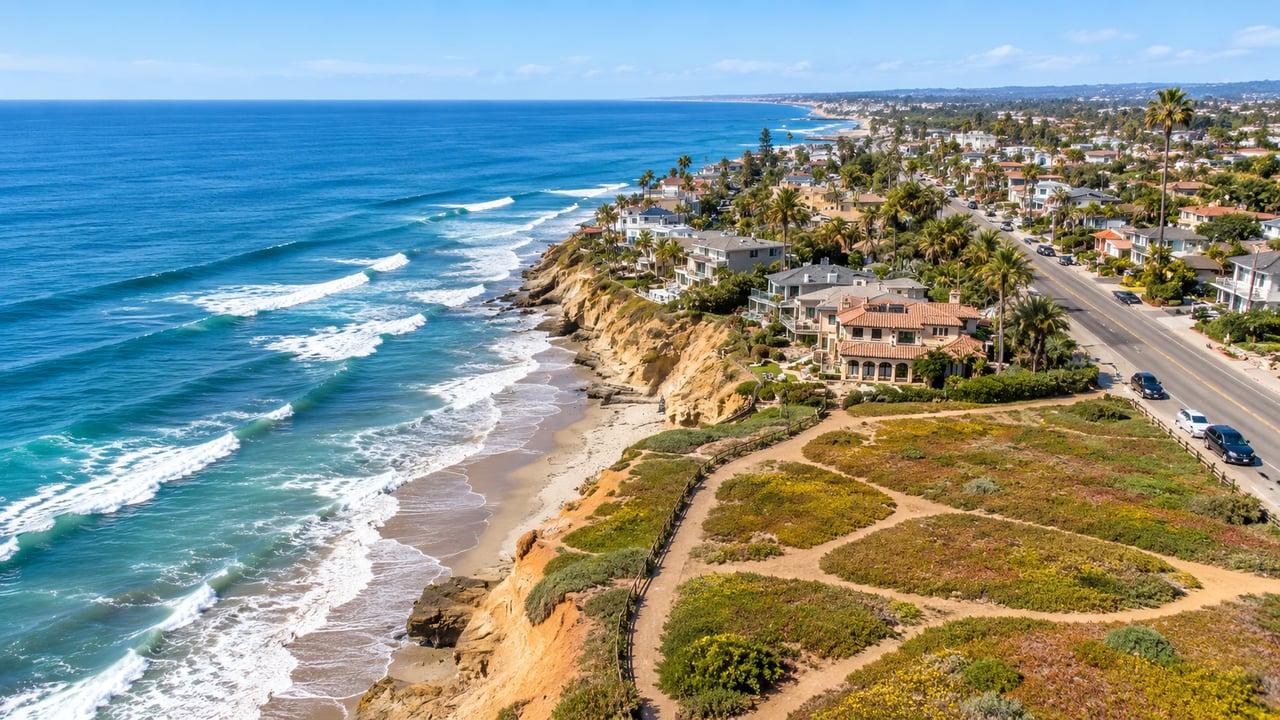
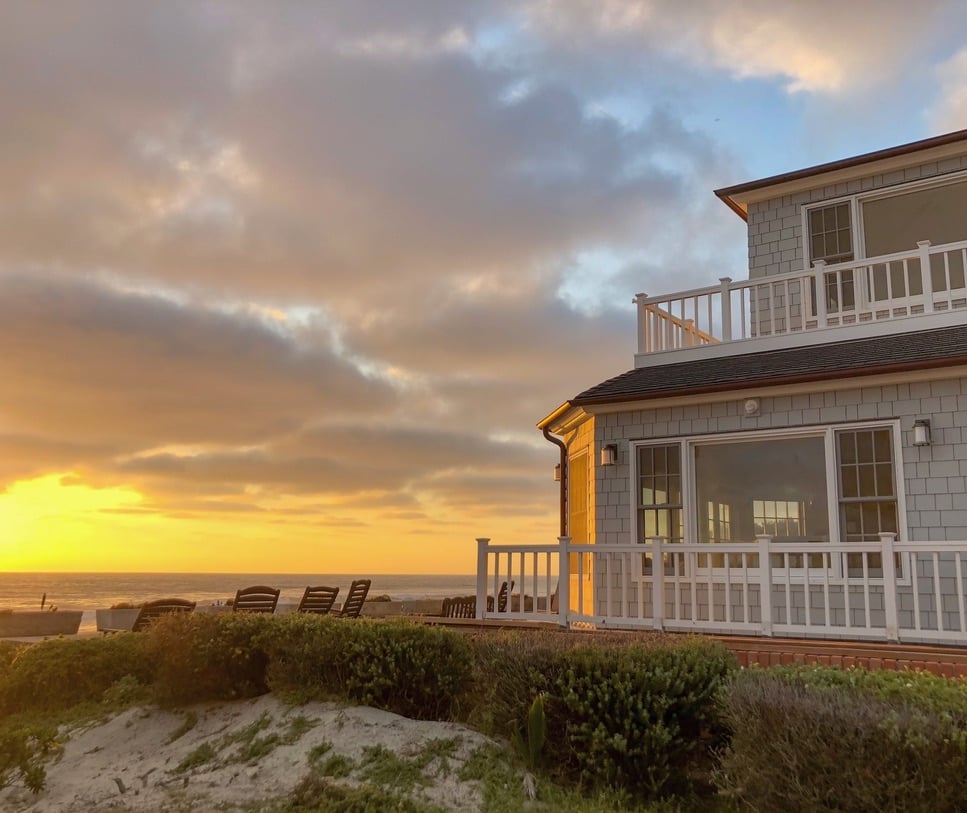
Beach Colony is the Del Mar most visitors picture: a compact grid of homes set directly along the shoreline with the sand a few steps from the door. It's dominated by large luxury homes (Bill Gates lives here...), vacation rentals and beach bungalows. Many residences capture full ocean frontage, and the feel is beach-first, social, and immediate. This is where you live if the water is the whole point.
Olde Del Mar is the original village core, laid out around Camino del Mar and the Del Mar Plaza. Here the housing is overwhelmingly detached single-family — a curated mix of vintage cottages, mid-century homes, and modern rebuilds — on individual lots with meaningfully larger yards than you'll find near the sand. Mature trees line the streets, and the atmosphere is village: quieter, more established, and rooted in a sense of neighborhood that has held for generations. This is where you live if you want the coast and the community.
Understanding that core distinction — beach-first versus village-first — is the foundation for every other difference between them.
Housing Stock and What You Actually Own
The physical product in each enclave is genuinely different, and it shapes both lifestyle and long-term value.
In Beach Colony, you are typically buying proximity above all. Lots are small, setbacks are tight, and that comes with a premium. The premium you pay is for location — being on or steps from the sand — and for view. Outdoor space tends to be vertical: rooftop decks and ocean-facing terraces engineered to make the most of a compact footprint. For a certain buyer, that trade is exactly right: minimal maintenance, maximum beach.
In Olde Del Mar, you're buying land and privacy alongside walkability. Detached homes on individual lots give you yard, separation, and the ability to renovate or rebuild to your own vision — which is why so much of the neighborhood's stock has been thoughtfully reimagined over the years. The result is a broader range of architecture and a broader range of price, from classic cottages to fully modern estates. For buyers who want a true single-family home within walking distance of the village, Olde Del Mar is often the only answer in Del Mar that delivers all three.
Lifestyle and Walkability
Both neighborhoods are walkable, but to different destinations.
Beach Colony's walk is to the water. Life orients around the boardwalk, the morning surf check, and the social rhythm of a beach community where neighbors overlap on the sand. It's an active, outward lifestyle, and in the prime summer months the energy is high.
Olde Del Mar's walk is to the village. It offers the highest walkability to Del Mar Plaza and the cluster of shops, cafés, and restaurants at the heart of town, which supports a genuinely car-light daily routine — coffee in the morning, dinner in the evening, all on foot. The trade-off is a slightly longer path to the sand, though "longer" in Del Mar still means minutes. For buyers who value dining, culture, and a settled neighborhood fabric as much as the beach itself, Olde Del Mar's balance is hard to beat.
Both sit within easy reach of the wider Del Mar experience — the racetrack and fairgrounds season, the bluff-top trails, and the coastal calendar that defines summer here.
The Practical Difference: Risk and Resilience
This is the factor buyers most often overlook, and it deserves candor. Beach Colony's greatest asset — proximity to the shoreline — is also its primary exposure. Homes closest to the water carry more sensitivity to erosion, storm surge, and long-term sea-level considerations, which can influence insurance and long-horizon planning. None of this makes oceanfront a poor investment; scarcity keeps the very best positions perennially in demand. But it does mean due diligence on any Beach Colony purchase must be rigorous.
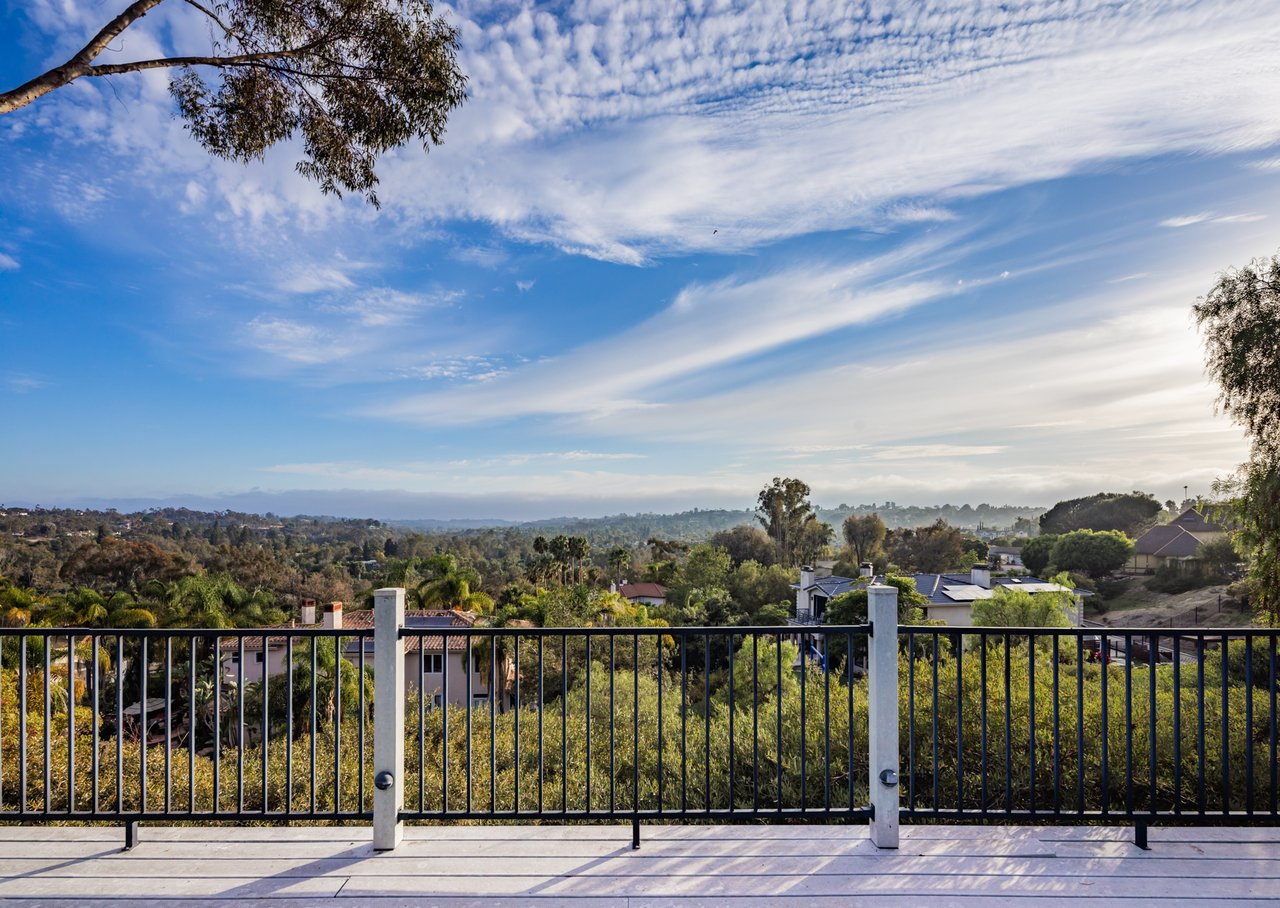
Olde Del Mar generally sits slightly higher and set back within the village blocks, which can translate to lower coastal-hazard exposure and, in some cases, more straightforward insurability. For buyers prioritizing resilience alongside lifestyle, that difference is worth weighing seriously — and it's exactly the kind of parcel-specific nuance that a knowledgeable local read brings to the table.
How the Two Markets Behave
Del Mar as a whole is one of the coast's strongest luxury markets, with a median well above neighboring communities — a reflection of how tightly held this village is. Within it, the two neighborhoods trade on different rhythms.
Beach Colony inventory is scarce, and truly oceanfront product is limited. When a well-priced home comes to market in prime beach season, it can move fast; in the off-season, the same home may require more patience. Values are driven heavily by position and view, and the gap between an average location and a premier one can be substantial.
Olde Del Mar tends toward steadier, year-round demand, anchored by the enduring appeal of village living and the relative rarity of detached single-family homes in this location. The broader product mix means more entry points, but the best homes — walkable, renovated, on a good lot — are always in demand.
In both enclaves, the strongest opportunities frequently trade quietly, before they're ever broadly marketed. That's true across Del Mar's luxury tier, which is why access matters as much as timing .
Which One Is Right for You
Choose Beach Colony if the ocean is the non-negotiable — if you want sand-at-the-door immediacy, a low-maintenance footprint, and views you'd trade square footage to keep. Choose Olde Del Mar if you want a true single-family home with land, privacy, and mature-street character, all within walking distance of the village, and you're willing to be minutes rather than steps from the water.
Neither is a compromise. They're simply two different, exceptional answers to the same question of how to live well on this coast. The buyers who do best here are the ones who go in knowing which answer is theirs.
Having closed more than $200 million in Coastal North County sales, I've represented buyers and sellers on both sides of this comparison — and my role is to make sure the home you choose matches the life you actually want, with the diligence a Del Mar purchase demands.
If you're weighing Olde Del Mar against Beach Colony — or Del Mar against the rest of the coast — I'd be glad to walk you through the specific streets, lots, and trade-offs in person.
→ Explore Del Mar luxury living at soldbynikol.com → Get your free Del Mar home valuation at soldbynikol.com/home-valuation → Ask about private and off-market Del Mar listings → Or reach out directly: [email protected] | (858) 336-9816
— Nikol Klein | Top 1% Luxury Agent | Del Mar Specialist | CA DRE #01982201