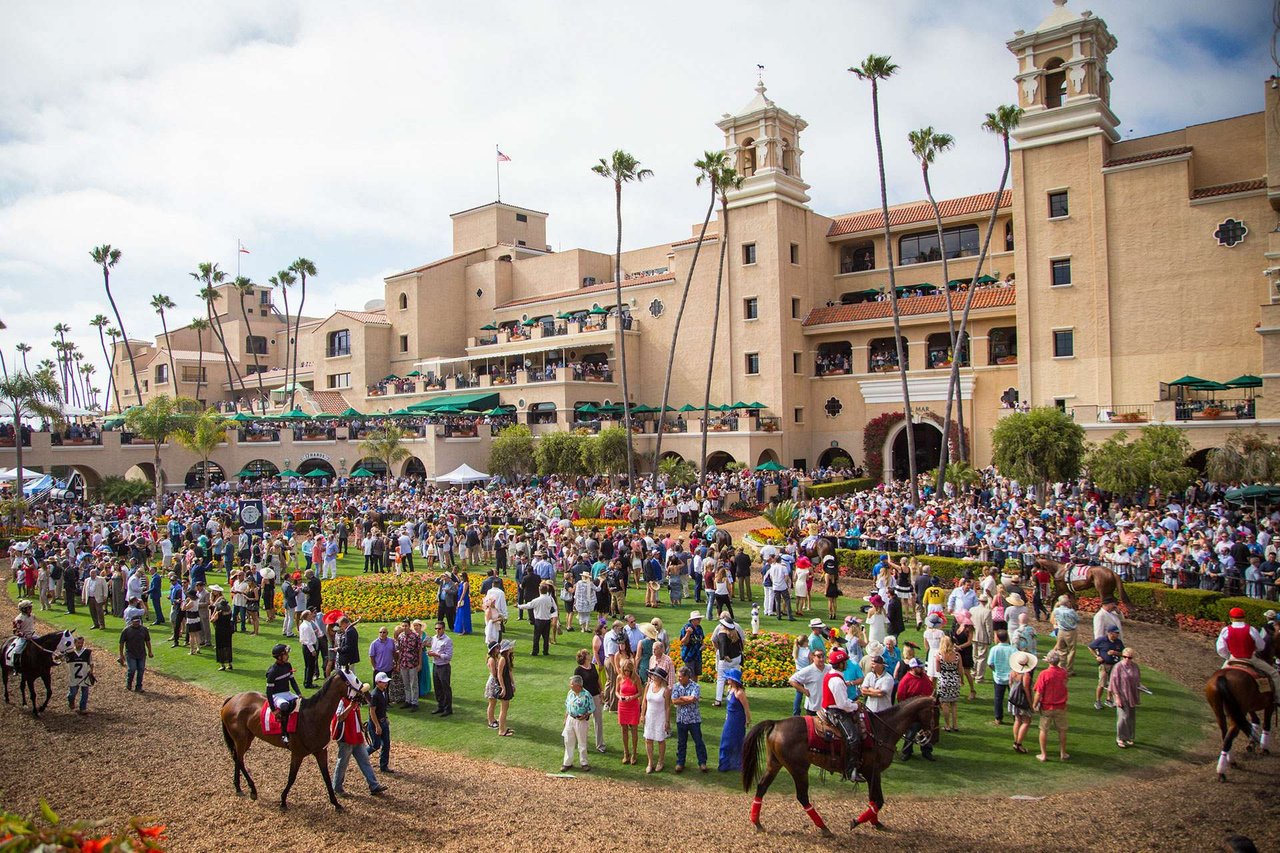
Every community has an origin story that explains why it became what it is. Del Mar's origin story involves Bing Crosby, Pat O'Brien, a handshake deal with the state of California, and a racing season that has defined the identity of this small coastal city for nearly 90 years. As a former Del Mar resident of over ten years, I've lived through more than a few racing seasons — and I can tell you that the racetrack doesn't just shape Del Mar's summer calendar. It shapes its character, its culture, and in measurable ways, its real estate values. Here's the full story.
— Nikol Klein, Compass Luxury | Former Del Mar Resident | Del Mar Specialist
The Beginning — Bing Crosby and a Dream on the Sand
In 1936, entertainer and thoroughbred horse owner Bing Crosby approached the State of California with a proposal: he and a group of Hollywood investors — including actor Pat O'Brien and a constellation of entertainment industry figures — would build a world-class horse racing facility on the Del Mar fairgrounds, provided the state would lease them the land. The state agreed. Construction began almost immediately.
The Del Mar Thoroughbred Club opened on July 3, 1937, with Crosby presiding over opening day and writing the iconic phrase "Where the Turf Meets the Surf" — a line that has defined the racetrack's identity ever since. The first day drew 15,000 spectators. Seabiscuit — the most famous racehorse in American history — ran at Del Mar in 1938, drawing crowds from across Southern California. The track was established not just as a racing venue but as a seasonal destination — a place where Hollywood royalty, San Diego society, and racing enthusiasts from across the country gathered each summer for a few weeks of spectacle, fashion, and genuine sport.
The Hollywood Years
Del Mar's early racing seasons were inseparable from Hollywood's golden age. Jimmy Durante — who wrote and sang the track's beloved anthem "It's a Great Day for the Race" — was a fixture at Del Mar for decades. Lucille Ball, Desi Arnaz, Red Skelton, Betty Grable, and virtually every major film star of the era made Del Mar part of their summer social calendar. The track's proximity to Los Angeles — just 90 miles north on the Pacific Coast Highway — made it the perfect summer escape for the entertainment industry's elite.
This Hollywood connection shaped Del Mar's identity in ways that persist to this day. The track's grandstands, its fashion culture, and its social atmosphere carry a glamour that reflects its origins as a playground for California's creative class. When residents and visitors describe the "Del Mar vibe," they are drawing — consciously or not — on this heritage.
Racing Legends and Historic Moments
Del Mar's racing history is studded with legendary moments that have secured its place among the most important tracks in American thoroughbred racing. Seabiscuit's 1938 appearances — including a celebrated match race against Ligaroti — put Del Mar on the national racing map permanently. Citation, Native Diver, Affirmed, and dozens of other legendary horses have competed at Del Mar across nearly nine decades of racing.
The track has produced drama that transcends the sport. The legendary "Photo" — a 1996 race decided by a photo finish so close that the result wasn't announced for several minutes while the crowd of 44,000 waited in collective suspension — remains one of the most talked-about moments in Del Mar racing history. The Breeders' Cup, held at Del Mar in 2017 and 2021, brought the international racing community to the track and generated global attention for the city that hosts it.
The San Diego County Fair — The Racetrack's Other Life
The Del Mar Fairgrounds that house the racetrack are not a seasonal facility — they are an active, year-round community asset that serves San Diego County in ways that extend well beyond thoroughbred racing. The San Diego County Fair, held each June on the fairgrounds, is one of the largest county fairs in the United States, drawing over a million visitors across its three-week run. For Del Mar residents, the fair is simultaneously a beloved community tradition and a source of seasonal traffic — a tradeoff that most residents accept cheerfully, having made peace with the July gridlock years ago.
The fairgrounds also host concerts, equestrian events, agricultural exhibitions, and community gatherings throughout the year. For buyers relocating to Del Mar, understanding the fairgrounds' year-round role in community life — and the seasonal impact on Del Mar's streets and parking — is part of understanding what it means to live here.
Racing Season — What It Actually Feels Like to Live Through It
After ten years of Del Mar summers, I can describe racing season from the inside. It typically runs from late July through mid-September — split into summer and fall meets — and the energy it brings to the community is unlike anything else in North County San Diego.
On race days, Camino Del Mar fills with people dressed in a way that Del Mar doesn't normally see — hats, sundresses, linen suits, the kind of intentional fashion that you more typically associate with Ascot or Kentucky Derby viewing parties. The Village restaurants are packed. The parking is a genuine consideration. The atmosphere is festive in the specific way that only a tradition approaching 90 years can be — there's something happening here that people have been coming back to for generations.
Opening Day — typically a Thursday in late July — is Del Mar's signature social event of the year. The fashion competition is serious, the attendance is at its highest, and the sense of community celebration is genuine. Long-term Del Mar residents treat Opening Day the way other communities treat their biggest holiday — a recurring annual ritual that marks the rhythm of the year.
For buyers relocating to Del Mar, racing season is worth understanding before you arrive. It brings energy and activity that some residents love without reservation and others find occasionally inconvenient. In ten years of living through it, my honest take: the inconveniences are real but manageable, and the energy it brings to the community — the sense of Del Mar doing what Del Mar does, doing it well, and doing it with style — is one of the things that makes this community genuinely special.
What the Racetrack Means for Del Mar Real Estate
The Del Mar Thoroughbred Club's impact on the community's real estate market is both direct and structural — and understanding it helps explain why Del Mar's values have held so consistently through market cycles.
It defines Del Mar's national and international identity. "Where the Turf Meets the Surf" is one of the most recognizable phrases associated with any residential community in California. Buyers from across the country and internationally who are considering Del Mar real estate often have their first encounter with the community through the racetrack's cultural footprint. That name recognition translates directly into buyer demand — and buyer demand, sustained over decades, is what creates and maintains real estate value.
It anchors a seasonal luxury economy. The racing season brings high-net-worth visitors to Del Mar every summer — many of them evaluating the community as a potential second home or full-time residence. The track serves as a direct pipeline of qualified buyers who experience Del Mar at its most vibrant and immediately begin asking their agents about the local real estate market. As a Del Mar agent who has fielded more than a few of those calls, I can tell you this pipeline is real.
It creates a community calendar that builds belonging. One of the underappreciated factors in real estate value is community cohesion — the sense that a neighborhood has a shared identity and a reason to gather. Del Mar's racing season, its farmers market, its Opening Day tradition, and its summer concert series collectively create a community calendar that builds the kind of belonging that makes residents want to stay. And residents who stay don't sell — which keeps inventory tight and values supported.
It's protected by permanence. The Del Mar Thoroughbred Club's lease with the state is long-term, the track's place in California's racing landscape is established, and the community's relationship with the racetrack is genuinely symbiotic. The track needs Del Mar's prestige and coastal setting. Del Mar benefits from the track's economic activity and cultural identity. This mutual dependence has sustained the relationship for nearly 90 years — and there's no credible reason to expect it to change.
The Racetrack and the Future of Del Mar
The Del Mar Fairgrounds has been the subject of ongoing discussion about its long-term future — including conversations about potential development, modernization, and the site's relationship to the surrounding community. These discussions are worth understanding for buyers considering Del Mar real estate, as they touch on questions about how the fairgrounds' land and infrastructure might evolve over the coming decades.
What is clear is that Del Mar's community and its elected representatives have consistently prioritized protecting the fairgrounds' role as a public asset and the racetrack's role as the community's defining cultural institution. The "Where the Turf Meets the Surf" tradition is not just a marketing phrase — it is a genuine expression of what Del Mar values about itself. And what communities value about themselves, they protect.
Understanding Del Mar's history — including the racetrack that has shaped it for nearly 90 years — is part of understanding why this community is what it is and why it's worth what it's worth. If you're thinking about buying or selling in Del Mar and want to understand the market from someone who has lived it — I'd love to have that conversation.
→ Explore our Del Mar neighborhood guide at soldbynikol.com/neighborhoods/del-mar
→ Get your free Del Mar home valuation at soldbynikol.com/home-valuation
→ Or reach out directly: [email protected] | (858) 336-9816
— Nikol Klein | Top 1% Luxury Agent | Former Del Mar Resident of 10+ Years | CA DRE #01982201